
Escape the crowds
Using AI to find stunning alternatives

I am planning out a trip to Europe and I have heard the following quotes:
“Don’t travel to Italy in the summer, it is too crowded”
“Don’t travel to Dubrovnik, it is overrun with Game of Thrones fans.”
A challenge is if you go somewhere that you don’t have the word of mouth recommendation it is a gamble to not go to the well-known spot. Thus when faced with an obscure location that might be good and less crowded vs. a known destination that will be crowded we find people going to the crowded destination.
Travelers seek out a personal recommendation, which is why social proof like reviews has been valuable. Travelers often view an unknown spot as too risky. Consequently, when choosing between a lesser-known but possibly less-crowded location and a well-known but crowded destination, they typically opt for the latter.
Overcrowding (or overtourism) remains a significant concern in many top destinations worldwide. Social media has accelerated the issue by amplifying popular spots—sometimes overnight—leading travelers to concentrate in locations like Venice, Barcelona, and Amsterdam. Still, an equally important driver lies in the steady overall rise of global tourism, which nearly doubled from the early 2000s to 2019, putting infrastructure in certain cities under strain. On the flip side, advanced algorithms and AI-driven trip-planning tools can help disperse tourists more evenly by highlighting lesser-known areas, potentially mitigating the worst of overtourism.
Beyond the common hot spots, there are still “tier 1” destinations—such as Hong Kong, San Francisco, Berlin, or Melbourne—where visitor numbers remain comparatively lower. Some are recovering more slowly from travel restrictions, and others have simply adopted more balanced visitor management strategies. As a result, they experience fewer crowd-related issues than other global hubs yet maintain their top-tier status for travelers. Overall, whether overtourism escalates or subsides comes down to how destinations manage growth, promote off-peak travel, and integrate social media responsibly to highlight broader or alternative locations.
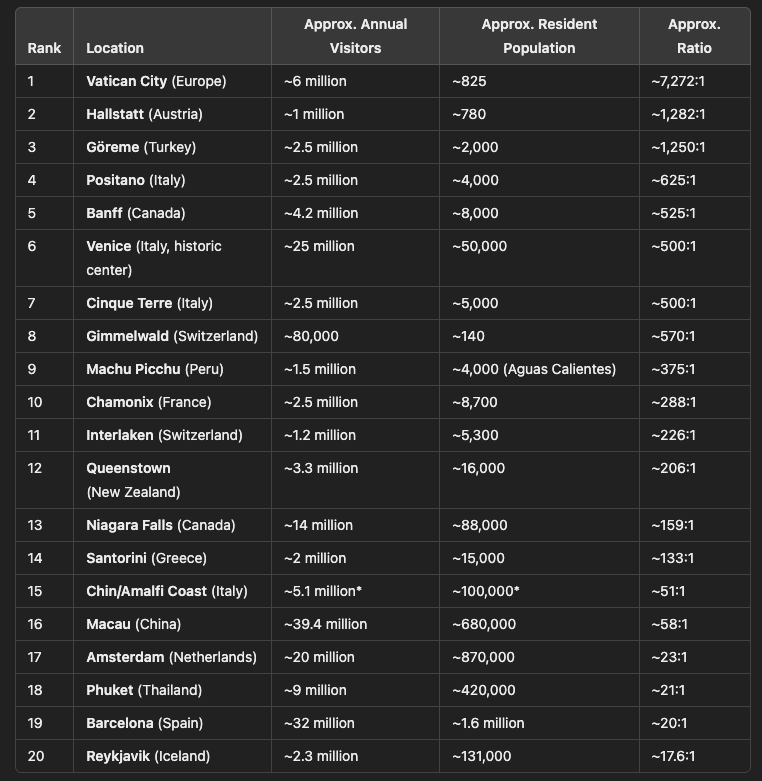
Here is a table that shows some of the highest overcrowding, based on number of tourists relative to residents. This also correlates with many people’s bucket list of destinations. Many of these show up consistently for me in Social.
Here is a different look that looks at the top destinations for travel in the world and adds in the ratios:
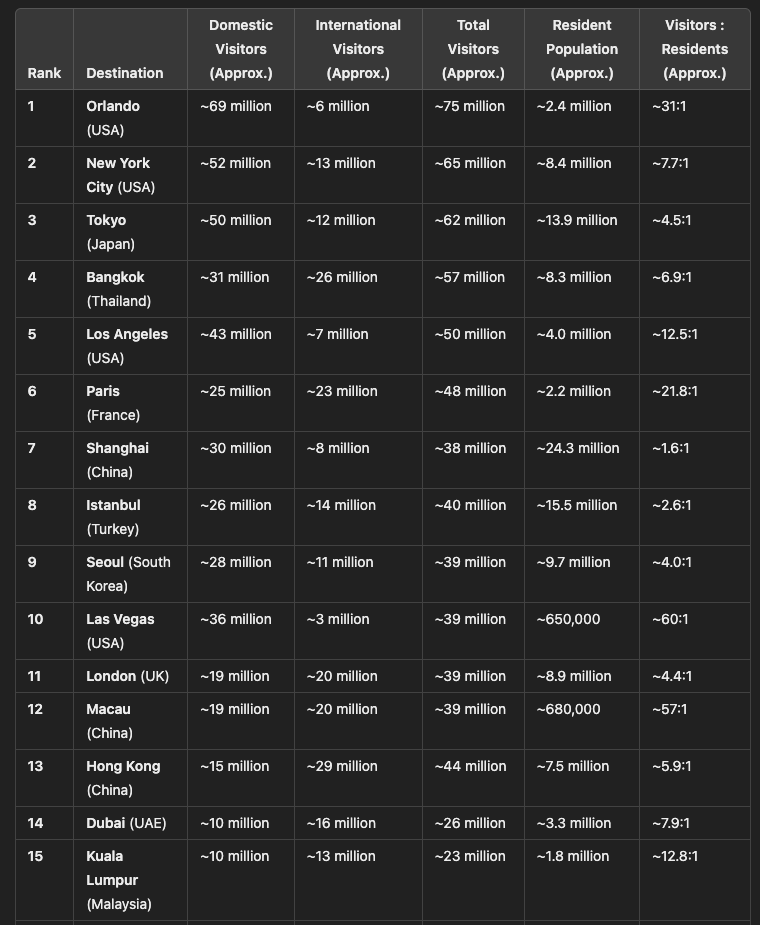
There is very little overlap between the two charts. You can also see the most traveled to location has a ratio at the bottom of the ratios for the top overcrowded locations. This points to the fact that smaller cities with ‘Tier 1’ destinations will feel the impact more than a large city. The larger cities can absorb more travel. Whereas the smaller destinations need help to disperse the tourists.
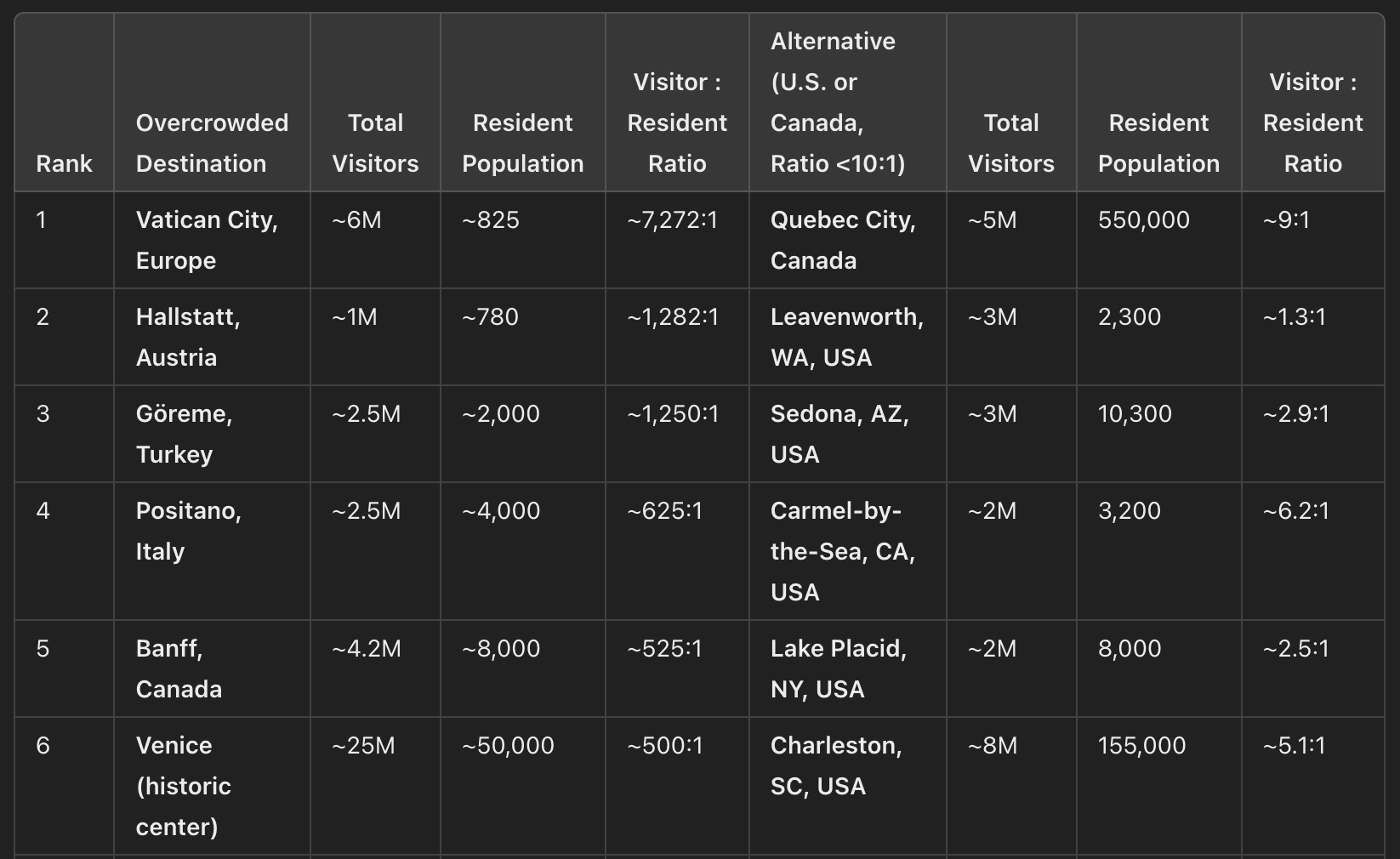
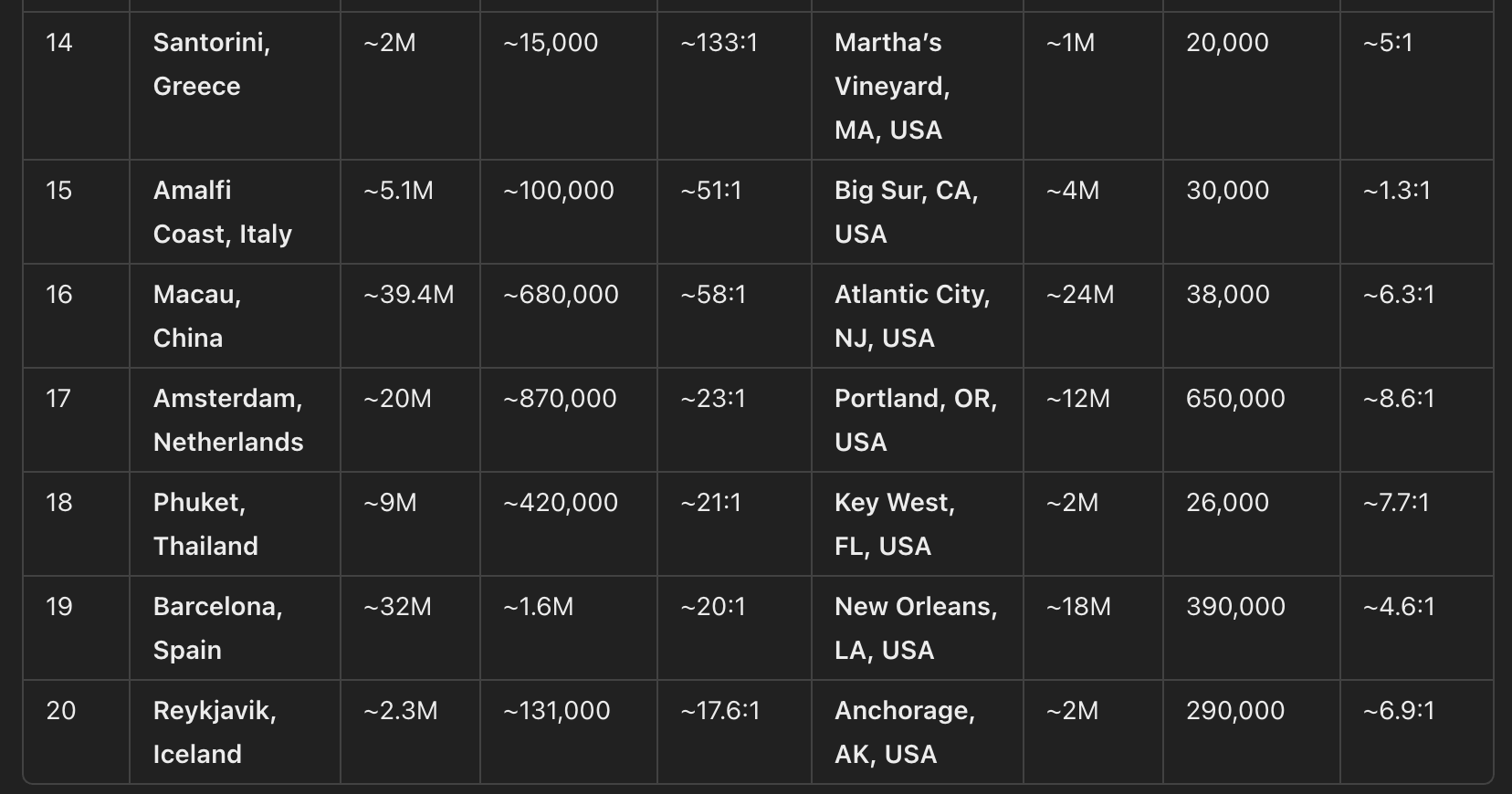
Using ChatGPT I was able to get alternatives that were in the US or Canada. It is amazing how AI can generate this level of information. The data is pretty good. The use of AI can be a game changer to generate options. It will be interesting to see how various sites are able to use this information to create new experiences.
I personally feel better equipped to plan trips that are more dynamic and explore more areas. I’ve been to many countries and cities, but without unlimited time and without experience I’d overlook many alternatives.